

“I Just Want to Get Rid of the Pain Without Surgery”
Updated: Aug 18
Most people cannot afford to be off work in this economy for weeks or months recovering from a procedure. They still need to work, stay active, take care of their families, and continue their normal lives. That is why I focus heavily on conservative and regenerative treatment options before considering surgery whenever possible.
The Benefits of Non-Surgical Treatment Options
One of the most effective non-surgical treatments I use in my office is Extracorporeal Shockwave Therapy (ESWT), commonly referred to as shockwave therapy. I use shockwave therapy to help patients with chronic heel pain, plantar fasciitis, Achilles tendonitis, tendon injuries, and other chronic soft tissue conditions heal naturally—without surgical downtime.
What Is Shockwave Therapy?
Shockwave therapy uses acoustic energy waves to stimulate the body’s natural healing response in damaged tissue. In many chronic foot and ankle conditions, the body essentially gets “stuck” in a cycle of inflammation and failed healing. Shockwave therapy helps stimulate blood flow, collagen production, cellular repair, and tissue regeneration to help restart the healing process.¹

Research Supporting Shockwave Therapy
Research has shown that ESWT may:
Improve circulation to injured tissue
Stimulate healing factors
Reduce chronic inflammation
Improve pain and function
Promote tendon and fascia repair¹
Why I Recommend Shockwave Therapy Before Surgery
One of the biggest advantages of shockwave therapy is that many patients can continue working and staying active during treatment. Unlike surgery, shockwave therapy is non-invasive and does not typically require:
Extended immobilization
Time off work
Surgical incisions
Narcotic pain medication after procedures
Long rehabilitation periods
Most patients are walking immediately after treatment and continue their normal daily activities with minimal downtime. For many working patients—especially those in healthcare, factories, construction, education, and retail—that matters.
Reducing Dependence on NSAIDs, Steroids, and Pain Medications
Many patients with chronic foot pain end up relying on:
Anti-inflammatory medications (NSAIDs)
Repeated steroid injections
Prescription pain medications
While these treatments may temporarily reduce symptoms, they often do not address the underlying tissue degeneration causing the pain. Repeated steroid injections can also weaken fascia and tendon tissue over time, increasing the risk of further injury in some patients. One reason I like shockwave therapy is that it focuses on stimulating healing rather than simply masking pain temporarily.
Recent systematic reviews comparing ESWT to corticosteroid injections for plantar fasciitis showed meaningful improvements in pain and foot function with shockwave therapy.² This is one reason many physicians are increasingly looking toward regenerative and non-invasive treatments to help reduce long-term dependence on medications and repeated injections. As a surgeon over the past 16 years, I have seen pros and cons related to treating this condition with fascial release, spur removal, and fascia debridement to see complications.

Surgical Options and Potential Complications in Chronic Plantar Fasciitis
When conservative care fails, surgical options such as partial plantar fasciotomy (plantar fascial release), endoscopic release, heel spur removal (calcaneal exostectomy), and plantar fascia debridement have been shown in published studies to improve pain and function in appropriately selected patients, as seen in my experience as well. Studies demonstrate significant improvements in pain scores and functional outcomes following both open and endoscopic procedures, including combined plantar fascia release with calcaneal spur resection and minimally invasive debridement techniques.¹²³
However, the literature consistently highlights that these procedures carry meaningful risks. Reported complications include persistent or recurrent heel pain, lateral column overload, arch instability due to over-release of the plantar fascia (disruption of the windlass mechanism), nerve injury (particularly branches of the lateral plantar nerve), scar pain, wound complications, and in some cases chronic biomechanical changes leading to altered gait mechanics.⁴⁵ In combined procedures involving spur resection and plantar fascia release, studies have also noted higher complication rates in some series, largely related to the extent of surgical dissection and soft tissue disruption required to create adequate working space.⁶ Additionally, this also requires 6 weeks in a walking boot, limited activities, and off work pending occupation.
Conditions I Commonly Treat With Shockwave Therapy
I commonly use shockwave therapy for:
Plantar fasciitis
Chronic heel pain
Achilles tendonitis
Insertional Achilles pain
Peroneal tendonitis
Posterior tibial tendon dysfunction
Tendon injuries
Chronic soft tissue inflammation
Scar tissue pain
Many of these patients have already tried stretching, orthotics, anti-inflammatory medications, injections, physical therapy, or immobilization without lasting improvement.
What Does the Research Show?
The published research supporting shockwave therapy continues to grow. A 2022 systematic review found ESWT to be a promising treatment option for Achilles tendinopathy, particularly in chronic cases that failed traditional conservative treatment.¹ A 2023 systematic review and meta-analysis evaluating ESWT for Achilles tendinopathy also demonstrated therapeutic benefits and improved outcomes in many patients treated conservatively.³
Additional randomized clinical trials and meta-analyses have shown improvements in:
Pain reduction
Functional outcomes
Activity tolerance
Patient satisfaction in chronic tendon and plantar fascia conditions⁴
Like any treatment, shockwave therapy is not perfect for every patient or every condition. Some studies show stronger results than others depending on the chronicity and severity of the injury. That is why proper diagnosis and patient selection are critical.⁵
My Philosophy on Foot & Ankle Care
I believe elective surgery has its place—but it should be the last option for these conditions listed. My goal is to help patients explore effective conservative treatment options first whenever appropriate. That may include:
Shockwave therapy
Custom orthotics
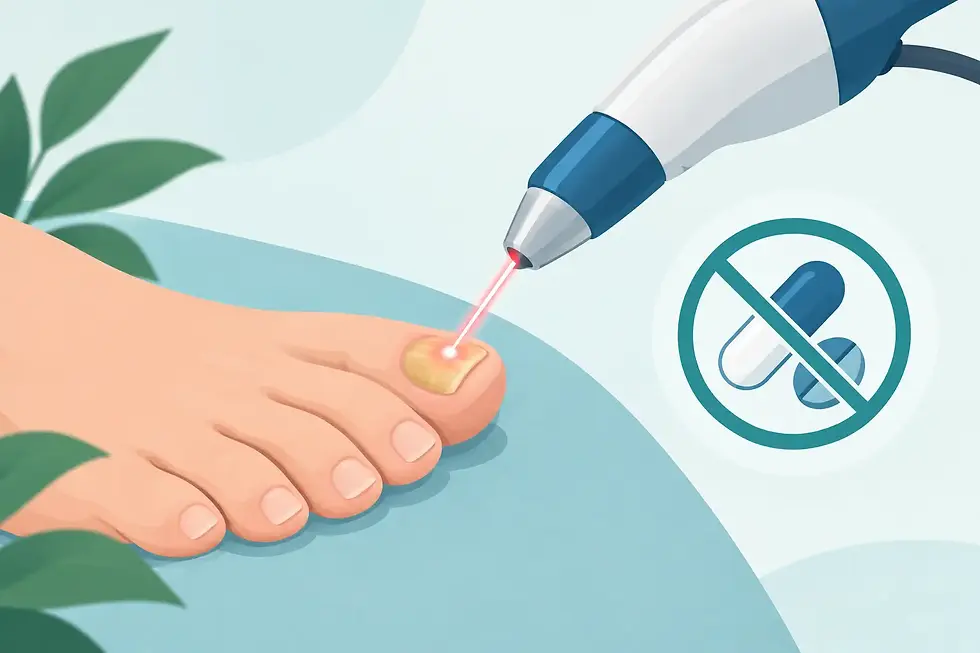
Laser therapy
Bracing
Physical therapy
Regenerative medicine approaches
Every patient is different, and treatment should be individualized based on their condition, work demands, lifestyle, and long-term goals.
Could Shockwave Therapy Help You?
If you are struggling with chronic heel pain, plantar fasciitis, Achilles tendonitis, or persistent foot and ankle pain that has not improved with traditional treatment, shockwave therapy may be an option worth considering. We perform a comprehensive evaluation to determine the source of pain and whether non-surgical treatments like shockwave therapy may be appropriate for your condition.
Our goal is simple: Help patients heal, stay active, return to work, and avoid unnecessary surgery whenever possible.
It is also important for patients to understand that shockwave therapy is considered an elective, advanced regenerative treatment and is typically not covered by insurance plans. Because of the way this therapy works—stimulating gradual tissue repair rather than providing a one-time intervention—it is performed as a structured treatment series over approximately 8–12 weeks.
Most patients require multiple sessions spaced out over this timeframe to achieve optimal results. While some patients notice improvement early in the process, the full benefit develops progressively as the tissue responds and remodels over the course of treatment. Dr. Martins will evaluate your condition, discuss the most appropriate treatment options for your specific case, and create a customized treatment plan or package designed to help you reach your goal of being pain-free and returning to normal activity as efficiently as possible.

Darryl J Martins DPM FACFAS
Board Certified in Foot and Ankle Surgery
Fellow, Foot and Ankle College of Ankle Surgeons
References
Stania M, Juras G, Chmielewska D, et al. Extracorporeal Shockwave Therapy for Mid-portion and Insertional Achilles Tendinopathy: A Systematic Review of Randomized Controlled Trials. Sports Medicine Open. 2022.
Al-Siyabi A, et al. Extracorporeal Shockwave Therapy Versus Corticosteroid Injection for Plantar Fasciitis: Systematic Review and Meta-analysis. Clinical Rehabilitation. 2024.
Fan Y, Feng Z, Cao J, et al. Therapeutic Effect of Extracorporeal Shock Wave in the Treatment of Achilles Tendinopathy: A Systematic Review and Meta-analysis. 2023.
Aqil A, Siddiqui MR, Solan M, et al. Extracorporeal Shock Wave Therapy Is Effective in Treating Chronic Plantar Fasciitis: A Meta-analysis of RCTs. Foot & Ankle Surgery. 2013.
Xiong Y, Wu Q, Mi B, et al. Research Progress and Clinical Application of Extracorporeal Shock Wave Therapy in Musculoskeletal Disorders. Frontiers in Bioengineering and Biotechnology. 2024.


Comments