

When Is Bunion Surgery Necessary? Signs to Know
A bunion can start as a small bump at the base of the big toe, then gradually become harder to ignore when shoes rub, walking hurts, or the toe begins pushing toward its neighbor. Patients often ask, when is bunion surgery necessary? The answer is rarely based on appearance alone. Surgery may be appropriate when pain, loss of function, worsening alignment, or shoe limitations continue despite properly used nonsurgical care.
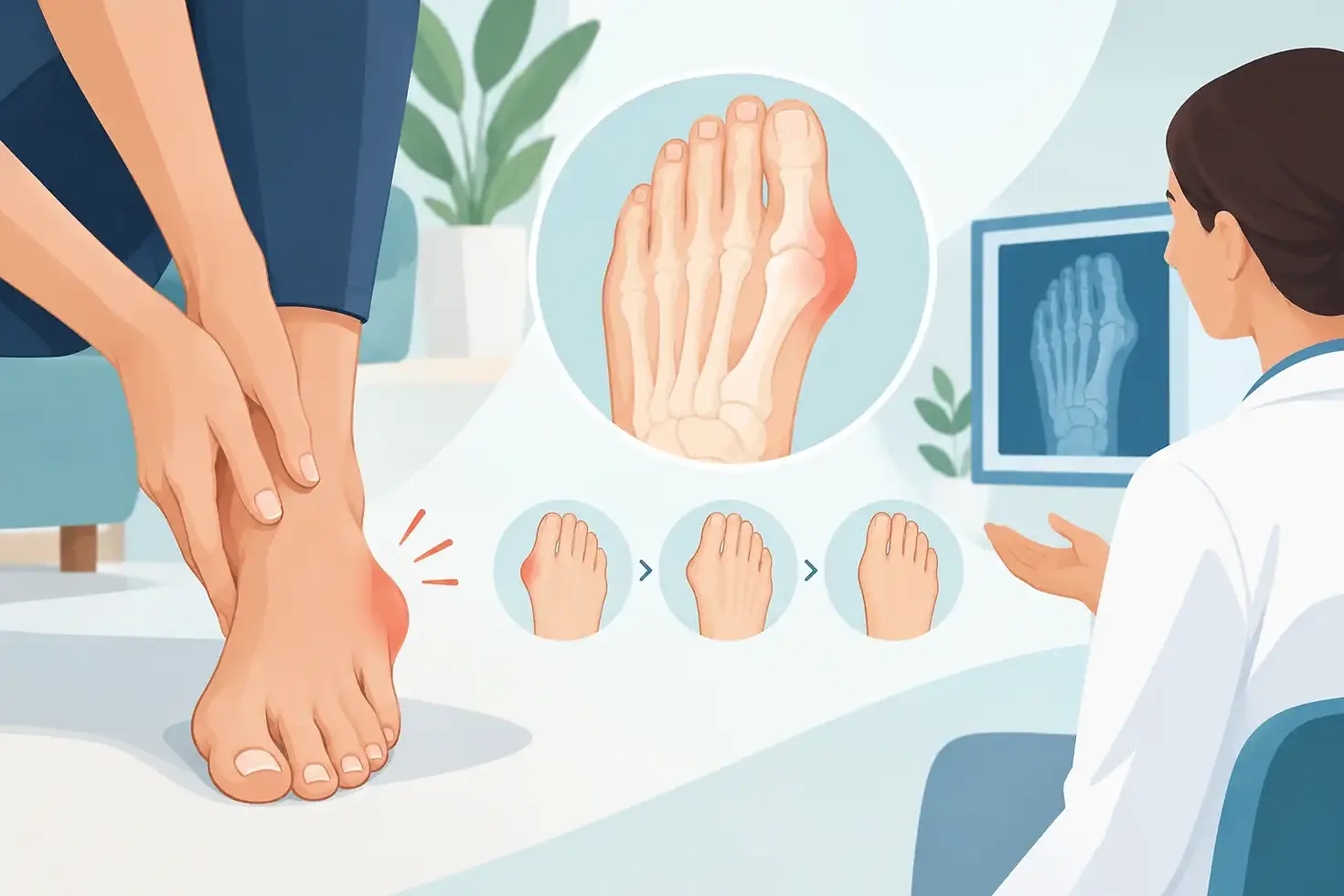
A bunion is a structural change in the joint at the base of the big toe. The visible bump is part of the problem, but the underlying issue is that the first metatarsal bone and big toe have shifted out of their normal relationship. Because it is a structural condition, a bunion will not disappear with padding, wider shoes, or orthotics. Those treatments can still be very effective at reducing symptoms and slowing the stress placed on the joint.
When Is Bunion Surgery Necessary?
Bunion surgery is usually considered when the bunion interferes with daily life and conservative treatment has not provided enough relief. That may mean pain during a work shift, trouble exercising, avoiding walks, difficulty finding comfortable shoes, or repeated skin irritation over the bump.
A larger bunion is not automatically a surgical bunion. Some people have a noticeable deformity with little or no pain and may do well without an operation. Conversely, a modest-looking bunion can cause substantial symptoms because of joint inflammation, arthritis, shoe pressure, or the way the foot bears weight.
The most useful question is not, “How bad does it look?” It is, “How much is it affecting how I live?” A foot and ankle specialist can examine the alignment, assess the motion and stability of the joint, and use X-rays to understand the degree of deformity and any arthritis or damage within the joint.
Pain That Persists Despite Appropriate Care
Ongoing pain is one of the clearest reasons to discuss surgery. This is more than occasional soreness after an unusually long day. It may include aching in the big toe joint, sharp pressure from shoes, burning over the bump, or pain that changes how you walk.
Before recommending surgery, a physician will commonly consider whether measures such as roomier footwear, activity changes, protective padding, anti-inflammatory treatment when medically appropriate, custom orthotics, or injection therapy have been given a fair trial. These options do not straighten the bone, but they can reduce pressure and inflammation enough for many patients to remain active comfortably.
If those steps no longer control symptoms, surgery may offer a more durable path forward by addressing the underlying alignment.
The Bunion Is Limiting Mobility or Daily Activities
Bunions deserve attention when they begin shrinking a person’s world. Perhaps you skip a favorite fitness class, cannot finish a shift without changing shoes, or choose errands based on how far you will need to walk. Older adults may notice that big toe pain affects balance or makes it harder to stay active, while runners and other active patients may find that even low-mileage exercise triggers symptoms.
Loss of motion at the big toe joint also matters. The big toe plays a major role in pushing off during walking. When the joint is painful, stiff, or poorly aligned, other parts of the foot, ankle, knee, hip, or back may compensate. Surgery is not a cure for every connected ache, but restoring a painful, dysfunctional big toe joint can improve the mechanics of walking for the right patient.
The Deformity Is Progressing or Causing Other Toe Problems
A bunion may gradually push the big toe toward the second toe. In more advanced cases, the big toe can overlap or move beneath the second toe, while the second toe may develop a hammertoe, painful callus, or instability at its own joint. Crowding can also make nail problems and skin irritation more likely.
Progression does not mean surgery must happen immediately. However, it is a reason to seek an evaluation rather than waiting until footwear becomes nearly impossible or multiple toes are involved. Earlier treatment may allow for a less extensive correction than a long-standing, rigid deformity, although the best timing remains individual.
Shoes Have Become a Constant Problem
Repeated rubbing, blisters, corns, calluses, and redness over the bump are not simply cosmetic frustrations. They are signs that footwear and foot shape are no longer working together. Some patients can manage this with a properly fitted wide toe-box shoe and targeted protection. Others reach a point where even accommodating shoes cause pain.
People with diabetes, poor circulation, reduced sensation, or a history of foot wounds should not ignore skin breakdown. A spot that seems minor can become more serious when healing is impaired. Prompt professional assessment is especially important in these situations.
What to Try Before Bunion Surgery
The right nonsurgical plan depends on the foot, the symptoms, work demands, activity goals, and medical history. It may include supportive shoes with enough width and depth, offloading pads, custom 3D-printed orthotics, and treatment for inflammation or related conditions such as arthritis, hammertoes, or tendon pain.
Orthotics are not designed to force a bunion back into place. Their role is to improve support and distribute pressure more effectively. This can be particularly helpful when flat feet, instability, or abnormal loading are contributing to discomfort.
A patient should not feel that surgery is the only meaningful option just because the bunion is visible. At the same time, repeated short-term fixes can become frustrating if they no longer let you work, move, and wear reasonable shoes comfortably. A clear discussion of what conservative care can and cannot accomplish helps set realistic expectations.
What Surgery Can and Cannot Do
Bunion surgery is intended to reduce pain, improve alignment, and help the foot function more comfortably in shoes. Procedures vary considerably. Depending on the deformity, the operation may involve shifting and stabilizing bone, correcting the joint alignment, addressing soft-tissue imbalance, or treating arthritis within the joint.
There is no single “best” bunion procedure for everyone. The surgical plan should reflect X-ray findings, severity, joint health, foot structure, age, activity level, bone quality, and personal goals. A procedure that suits a flexible, mild deformity may not be appropriate for a severe bunion with arthritis or instability.
Surgery also involves real trade-offs. Recovery requires protecting the correction while bone and soft tissue heal. Some patients can bear weight in a surgical shoe or boot early, while others need a period of limited or non-weight-bearing activity. Swelling may improve slowly and can last for months, especially by the end of the day. Returning to regular shoes, driving, work, and sports happens on different timelines for different procedures and occupations.
Potential complications include infection, delayed bone healing, stiffness, nerve irritation, continued pain, recurrence, and problems related to hardware. These risks are not reasons to avoid surgery automatically, but they are reasons to make the decision with a surgeon who has carefully evaluated the whole foot and explained the expected recovery.
Questions to Ask at Your Bunion Evaluation
A productive appointment should leave you with more than a recommendation. Ask what is causing your pain, whether arthritis or another condition is involved, what nonsurgical options are still reasonable, and what may happen if you wait. If surgery is recommended, ask which procedure is proposed, how long you will be off your foot, when you can return to work and exercise, and what result is realistic for your footwear goals.
Continuity of care matters here. At DocMartins Foot & Ankle Clinics, patients work with the same physician through evaluation, treatment planning, surgery when needed, and follow-up. That makes it easier to adjust a plan as symptoms, lifestyle needs, and healing progress change.
The Right Time Is Personal, Not Cosmetic
A bunion operation is most appropriate when the benefits of correcting a painful, limiting foot problem outweigh the demands and risks of recovery. You do not need to wait until you can barely walk, and you do not need surgery simply because your foot looks different. If pain is changing your routine or conservative care is no longer enough, a focused foot and ankle evaluation can give you a practical answer and a treatment plan that fits your life.



Comments