


The Future of Diabetic Foot Care Starts Earlier
A small blister, a new callus, or warmth in one area of the foot can become serious faster than many people expect. The future of diabetic foot care is not simply better treatment once a wound appears. It is earlier detection, more personalized protection, and faster action before a minor problem threatens mobility.
For people living with diabetes, foot care is about preserving independence. A healthy foot supports work, family responsibilities, exercise, and everyday life. When sensation, circulation, skin health, or foot shape changes, the safest approach is a consistent plan built around prevention and prompt specialist evaluation.
The future of diabetic foot care is proactive
Diabetes can affect the nerves and blood vessels that keep the feet healthy. Neuropathy may reduce a person's ability to feel pressure, rubbing, heat, or injury. Reduced circulation can slow healing. High blood sugar can also make infection harder to control. The result is that a problem may progress without causing much pain.
Traditional diabetic foot care has long emphasized regular exams, appropriate shoes, nail care, and daily self-checks. Those basics remain essential. What is changing is the ability to identify risk sooner and match treatment more closely to the individual patient.
Future-focused care asks practical questions before there is an open wound: Where is pressure building? Has the skin begun to thicken? Is one foot becoming warmer than the other? Is a deformity making standard shoes unsafe? Are balance or mobility changes increasing the chance of a fall? Addressing these warning signs early is often less complicated than treating an ulcer, infection, or fracture later.
Monitoring will become more connected, not less personal
New technology can help track changes that are easy to miss at home. Smart insoles and temperature-monitoring tools, for example, may identify unusual pressure or heat patterns. Because inflammation can raise skin temperature before an ulcer is visible, these tools may provide an early signal to reduce activity, inspect the area, or contact a foot specialist.
Digital foot photography and image-based assessment may also make it easier to document changes in skin color, swelling, calluses, or wounds over time. Remote check-ins can be particularly helpful for patients who have transportation challenges, busy work schedules, or live outside a larger medical center.
Artificial intelligence may eventually assist clinicians by identifying patterns in wound images or risk data. Still, these systems are tools, not replacements for a medical examination. A photo cannot reliably assess circulation, infection depth, bone involvement, shoe fit, or the full condition of the skin and nails. Technology is most useful when it helps the patient and physician respond sooner, not when it creates false reassurance.
For patients in Southeast Michigan, virtual follow-up may be a practical part of care when appropriate. An in-person visit remains necessary for many concerns, especially a new wound, redness, drainage, swelling, fever, or changes in skin color.
Custom protection will matter more as feet change
A diabetic foot is not defined by a diagnosis alone. One person may have good sensation but painful arthritis and a bunion that causes shoe pressure. Another may have neuropathy, flat feet, a history of ulceration, and very little warning when a problem begins. Their protection plans should not look the same.
The next generation of diabetic foot care will rely more heavily on custom offloading. Offloading means reducing pressure from vulnerable areas of the foot. This can include diabetic shoes, accommodative inserts, bracing, padding, wound boots, and custom orthotics. Digital scanning and 3D-printed orthotic technology can help create devices that reflect a patient's foot shape, pressure points, gait, and footwear needs.
Custom devices are not a one-time purchase. Weight changes, activity level, foot deformity, arthritis, and wear inside the shoe can alter how pressure is distributed. A device that was helpful a year ago may need adjustment now. Regular review is particularly valuable for people with numbness, previous ulcers, Charcot changes, amputations, or significant toe and joint deformities.
Shoes remain part of medical prevention, not just comfort. A properly fitted shoe should have enough depth and width, a stable sole, and room for any prescribed insert. The right choice depends on the foot's risk level. A patient with intact sensation and no deformity may need a different plan than someone who has already developed a pressure wound.
Earlier treatment can prevent more complicated care
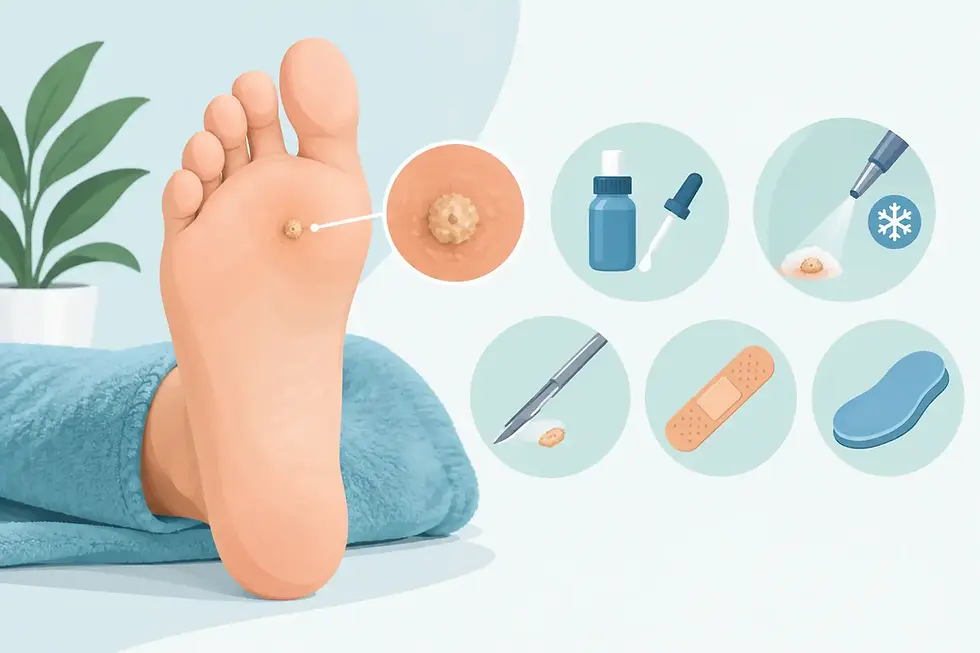
Advanced treatments are expanding, but the greatest benefit often comes from using established care at the right time. Callus reduction can relieve damaging focal pressure. Treatment for an ingrown nail, fungal nail, wart, or cracked heel can remove a potential entry point for infection. Addressing a bunion, hammertoe, or unstable ankle may reduce recurring shoe friction and improve walking mechanics.
When an ulcer is present, treatment may involve wound debridement, pressure relief, infection assessment, imaging, vascular evaluation, and frequent follow-up. Some wounds need surgical care, especially when there is deep infection, exposed bone, severe deformity, or tissue that cannot heal without correcting the underlying pressure problem. The appropriate treatment depends on the wound, blood flow, glucose control, overall health, and the patient's ability to stay off the affected area.
Regenerative treatments and biologic approaches continue to develop, and some may have a role in carefully selected cases. They should not be viewed as shortcuts around pressure relief, circulation assessment, infection control, or blood sugar management. Effective diabetic wound care is usually a coordinated process, not a single product or procedure.
At DocMartins Foot & Ankle Clinics, continuity matters because diabetic foot risk can change over time. Seeing the same physician at every visit helps create a clearer picture of a patient's skin changes, footwear needs, activity goals, and response to treatment.
The daily habits that technology cannot replace
Even with smarter monitoring and more precise orthotics, daily self-care remains the foundation. Check the tops, bottoms, sides, and spaces between the toes each day. A hand mirror can help, and a family member may be able to assist if vision or mobility is limited. Look for cuts, blisters, redness, drainage, swelling, cracks, darkened skin, or areas that feel warmer than the surrounding foot.
Avoid walking barefoot, including around the house. Test bath water with a hand or elbow if neuropathy is present, since reduced sensation raises the risk of burns. Keep the skin clean and dry, use moisturizer on dry skin but not between the toes, and do not attempt to cut corns or calluses with over-the-counter blades or chemical removers.
Good diabetes management, smoking cessation, nutrition, and regular movement also support circulation and healing. Exercise plans should be individualized. Walking may be beneficial for many people, but it may not be appropriate to continue through a new wound, unexplained swelling, or a suspected stress injury.
Know when to call promptly
Do not wait for severe pain before seeking care. Call a foot and ankle specialist promptly for a cut, blister, puncture, sore, new drainage, redness, swelling, foul odor, blackened skin, or a sudden change in foot shape. Urgent evaluation is especially important if you have fever, chills, spreading redness, or an ulcer that is getting larger.
The future of diabetic foot care will bring better sensors, better imaging, and more individualized devices. But the most meaningful progress is simple: notice changes early, protect the foot from repeated pressure, and get experienced care before a small concern becomes a major interruption to your life.


Comments