

Laser for Fungal Nails: Better Results, No Oral Risks
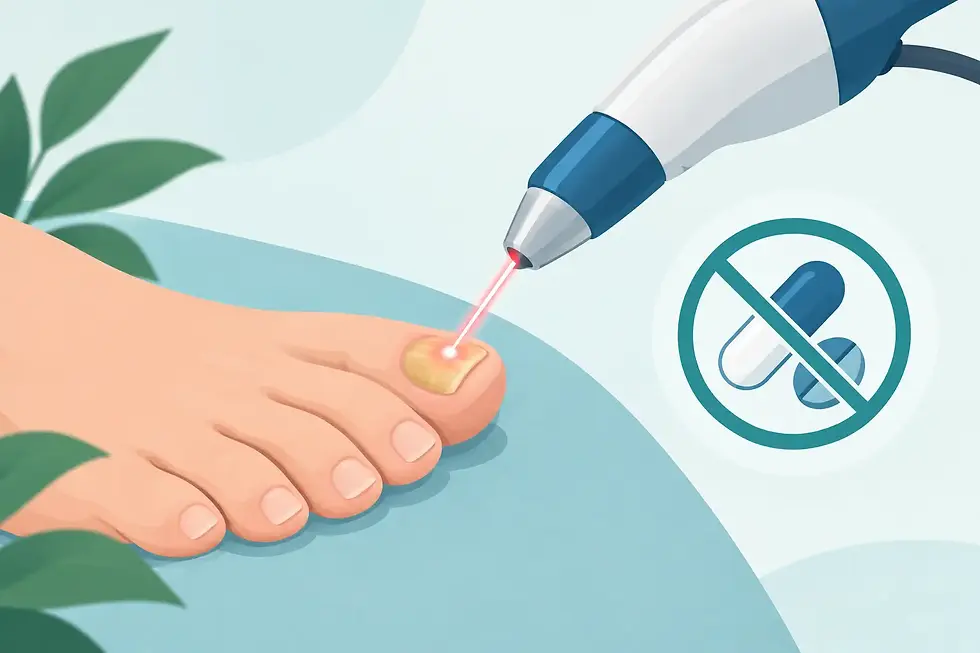
A thick, yellow, brittle toenail can be more than a cosmetic frustration. It may snag socks, make shoes uncomfortable, or cause embarrassment at the pool. Patients considering laser for fungal nails, better results, no risk factors with oral medication often want one clear answer: can laser treatment clear the infection without the concerns that come with prescription pills?
The honest answer is more useful than a sales pitch. Laser treatment can be a reasonable option for some people, particularly when oral antifungal medication is not appropriate. But laser is not completely risk-free, and it is not automatically more effective than oral medication. The best plan starts with confirming the diagnosis, understanding your health history, and setting realistic expectations for nail regrowth.
Why the diagnosis comes before treatment
Not every thick or discolored toenail is caused by fungus. Repeated shoe pressure, prior injury, psoriasis, eczema, circulation issues, and certain nail conditions can all change a nail's appearance. Treating a nonfungal nail with a laser or medication will not produce the result you want.
A podiatric evaluation may include examining the nail and obtaining a clipping or sample for testing. This step matters because a confirmed fungal infection helps guide treatment, while identifying the specific pattern and severity helps determine whether a topical medication, laser, oral medication, nail care, or a combination is most sensible.
Fungal nails also do not become clear overnight. Even when treatment successfully eliminates the fungus, the damaged nail must grow out. A big toenail can take 9 to 18 months to fully replace itself, and growth may be slower in patients with poor circulation, diabetes, or a history of nail trauma.
Laser for fungal nails: what it can and cannot do
Laser devices use targeted light energy to heat the nail and tissue beneath it. The goal is to reduce fungal organisms while avoiding harm to surrounding skin. Treatment is performed in the office, generally does not require needles or anesthesia, and allows patients to return to usual activities afterward.
For patients who cannot take oral antifungal drugs because of liver disease, medication interactions, prior side effects, or personal preference, this can be appealing. Laser treatment does not expose the entire body to an oral medication. That is a meaningful difference, especially for people taking multiple prescriptions.
Still, it is important to separate “no systemic medication risk” from “no risk.” Laser treatment may cause temporary warmth, discomfort, redness, or tenderness around the nail. In uncommon cases, excessive heat can cause blistering or a minor burn. A properly performed treatment and appropriate settings help reduce these concerns, but no procedure is entirely without potential side effects.
Results also vary. Some patients see a healthier-looking nail grow in after a series of treatments. Others have partial improvement or recurrence, particularly when infection involves much of the nail, reaches the nail matrix, affects several toenails, or occurs alongside athlete's foot. Research on laser therapy for nail fungus has shown mixed results, and outcomes differ by laser type, treatment protocol, and how success is measured.
Are results better than oral medication?
For many confirmed, moderate-to-severe fungal toenail infections, oral antifungal medication has historically produced higher cure rates than laser treatment alone. Terbinafine is a commonly prescribed oral option because it can reach the nail through the bloodstream and treat infection as the nail grows.
That does not make oral medication the right choice for every patient. It can cause side effects and may interact with other drugs. Although serious liver problems are uncommon, liver health and medication history should be reviewed before treatment. Depending on the medication and individual health factors, your clinician may recommend laboratory testing or choose another approach.
The practical question is not whether laser is universally better. It is whether laser is better for you. A person with extensive nail involvement who has no significant medication concerns may be a good candidate for oral therapy. Someone with liver disease, complex prescriptions, or a strong preference to avoid systemic medication may reasonably favor laser-based care, even if the expected clearance rate is less predictable.
Combination treatment may make sense
Some patients benefit from combining strategies. Nail thinning or debridement can reduce pressure in shoes and remove diseased nail material. A topical antifungal may be used alongside laser treatment or after oral medication. Treating athlete's foot, disinfecting or rotating footwear, keeping feet dry, and avoiding shared barefoot surfaces can all reduce the chance of reinfection.
Combination treatment is not a guarantee, and it is not necessary for every case. It is most useful when the infection is persistent, involves multiple nails, or returns after previous treatment. The right approach should reflect the severity of the infection, your medical history, your budget, and your tolerance for a longer treatment process.
Who may be a good candidate for laser treatment?
Laser treatment may be worth discussing if you have laboratory-confirmed fungal nail infection and want to avoid oral medication, have had side effects from antifungal pills, take medications that may interact with oral therapy, or have health conditions that make systemic treatment less desirable.
It can also be a practical option for people who want office-based treatment with little downtime. However, laser may be less satisfying when the expectation is immediate cosmetic improvement or a guaranteed cure after one visit. Nails grow slowly, and fungal infections can recur even after an initially successful course of treatment.
People with diabetes, neuropathy, poor circulation, or reduced immune function should not simply self-treat a suspicious nail. These conditions can raise the stakes of skin injury and infection. A careful foot examination can identify whether nail fungus is the main issue and whether there are other foot-health concerns that need attention first.
Questions to ask before choosing a treatment
Before committing to laser treatment, ask whether the fungus has been confirmed, how many sessions are recommended, what results are realistic for your level of nail involvement, and what total cost to expect. Laser treatment for fungal nails is often considered elective and may not be covered by insurance.
Also ask how progress will be measured. A clear strip of new nail growing from the base is often more meaningful than an immediately improved appearance on the old, damaged portion of the nail. Photographs and periodic examinations can help track whether healthy nail is replacing affected nail over time.
If oral medication is being considered, review every prescription, over-the-counter medicine, supplement, and medical condition with your clinician. A medication plan should never be based only on an advertisement or a friend’s experience. Your risks and likely benefits are individual.
A treatment plan should fit your feet and your health
At DocMartins Foot & Ankle Clinics, fungal nail care begins with a direct assessment rather than a one-size-fits-all recommendation. The same physician can review your nail condition, health history, medications, and goals, then explain whether laser treatment, oral medication, topical care, regular nail reduction, or a combined plan is appropriate.
The most helpful next step is a podiatric evaluation before the nail becomes more painful, spreads to other nails, or leads to skin cracking around the toes. A realistic treatment plan can protect comfort in shoes and give healthy nail the time it needs to grow back.
Learn more by downloading our Fungal ail LAser information brochure
www.adrianfootankle.com/files/ugd/a66349fc54eb3d3cde4a9ba33ade2b208fbdb5.pdf
Dr Darryl Martins DPM


Comments