

Is Regenerative Medicine for Foot Pain Right?
A painful first step out of bed, an Achilles tendon that will not settle down, or arthritis that makes a short walk feel like a long one can change how you move through the day. Regenerative medicine for foot pain may be part of the answer for selected patients, but it is not a shortcut around a proper diagnosis. The best results begin by identifying exactly what tissue is injured, how severe the problem is, and whether a regenerative treatment is appropriate for your health and goals.
What regenerative medicine means for foot pain
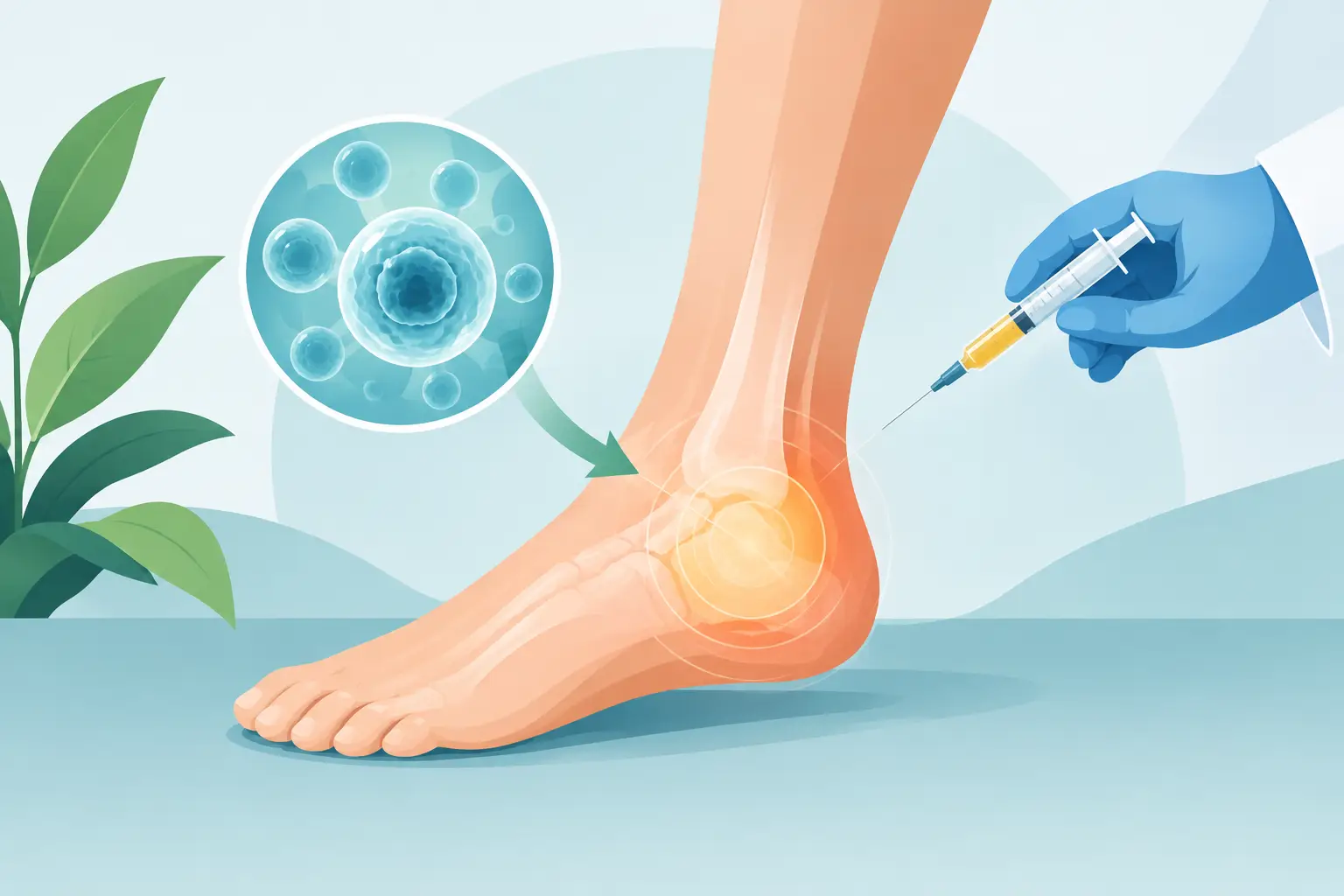
Regenerative medicine is a broad term for treatments designed to support the body's natural repair response. In foot and ankle care, this may include biologic injection therapies that use components derived from your own blood, such as platelet-rich plasma, commonly called PRP. Platelets contain signaling proteins involved in healing. When placed in a carefully selected area, they may help influence the healing environment in damaged tendon, ligament, or soft tissue.
This approach is different from a cortisone injection. Cortisone can reduce inflammation and may provide meaningful short-term relief for some conditions. Regenerative injections are intended to support tissue recovery over time rather than simply quiet symptoms. Neither approach is automatically better. The right choice depends on the diagnosis, the tissue involved, your activity level, previous treatment, and the risks that matter most to you.
Some patients hear the term regenerative medicine and assume it can regrow any damaged tissue or eliminate the need for surgery. That is not an accurate expectation. These treatments may be useful tools within a complete plan, but they cannot reverse every form of arthritis, repair a complete tendon rupture, correct a significant bunion deformity, or replace the stabilization needed after certain fractures.
Conditions that may be considered for regenerative medicine for foot pain
Chronic tendon and fascia problems are often where regenerative therapies receive the most consideration. These conditions can be stubborn because the affected tissue may have limited blood supply or has been overloaded for months before care begins.
Plantar fasciitis is a common example. Persistent heel pain can occur when the thick band of tissue along the bottom of the foot becomes irritated or degenerative. Most patients improve without injections through appropriate footwear, stretching, activity modification, supportive orthotics, and sometimes shockwave therapy. When pain has continued despite a well-directed conservative plan, an injection-based regenerative option may be discussed.
Achilles tendinopathy is another potential use. The Achilles tendon experiences high forces with walking, running, climbing stairs, and sports. A clinician must distinguish tendinopathy from a partial tear, complete rupture, bursitis, or pain referred from another area. Continuing to run through a tendon injury without a diagnosis can turn a manageable problem into a longer recovery.
Regenerative options may also be considered for selected ligament injuries, chronic forefoot soft-tissue pain, or joint-related symptoms. Evidence and expected outcomes vary by condition. For arthritis, for example, an injection may be considered to help symptoms in some cases, but it does not restore severely worn cartilage or correct joint deformity. If pain stems from a stress fracture, nerve irritation, infection, circulation problem, or poorly controlled diabetes, a different care pathway may be safer and more effective.
Diagnosis comes before the injection
Foot pain is specific, but its causes are not always obvious. Heel pain may be plantar fasciitis, a nerve problem, a stress injury, arthritis, or referred pain. Pain near the ball of the foot may involve a neuroma, capsulitis, a plantar plate injury, or a joint condition. Treating the wrong structure can delay recovery.
A focused evaluation should include your history, activity demands, shoes, prior injuries, medications, and medical conditions. A physical examination helps determine where pain is generated and whether there is weakness, instability, swelling, limited motion, or changes in sensation. X-rays, ultrasound, or advanced imaging may be appropriate when the diagnosis is uncertain or a more serious injury needs to be ruled out.
This level of assessment matters especially for people with diabetes, neuropathy, circulation concerns, immune suppression, or a history of foot ulcers. In those situations, protecting the skin, preventing infection, and identifying pressure-related problems may take priority over elective injection treatment.
What treatment can look like
If a regenerative injection is a reasonable option, it should fit into a plan rather than stand alone. PRP treatment commonly begins with a blood draw. The sample is processed to concentrate platelets, then the preparation is injected into the targeted area. Image guidance may be used when precision is important.
The appointment itself is usually brief, but healing is not immediate. Temporary soreness after an injection can occur, and patients may be asked to limit high-impact activity for a period of time. A gradual return to walking, work, exercise, or sport is guided by symptoms and the tissue being treated. Physical therapy, strength work, stretching, supportive shoes, bracing, or custom orthotics may remain essential parts of recovery.
A well-designed plan also addresses why the problem developed. A runner may need training adjustments and calf-strengthening work. A warehouse employee may need better footwear and a strategy for long shifts on concrete. Someone with flat feet may benefit from support that improves foot mechanics. Without these changes, pain can return even after a successful procedure.
Benefits, limits, and practical questions
The potential appeal of regenerative care is understandable: patients want relief that supports healing and helps them stay active. Some people report improvement in pain and function after treatment, particularly when it is paired with rehabilitation and the underlying mechanical issue is addressed. Results can take weeks to months, and individual response varies.
There are trade-offs. Regenerative injections are not appropriate for every diagnosis, and clinical evidence is stronger for some uses than others. Insurance coverage can be limited, so cost should be discussed upfront. Your clinician should also review potential risks, including post-procedure pain, bleeding, infection, and the possibility that symptoms do not improve.
Ask direct questions before deciding: What is the exact diagnosis? What conservative options have I already tried, and were they done long enough to judge? What improvement is realistic? How will activity be modified afterward? What is the total expected cost? A clear answer to these questions is more valuable than a promise of a quick cure.
When another treatment may make more sense
Regenerative care is only one option in modern foot and ankle treatment. Custom orthotics can reduce strain in conditions related to foot mechanics. Shockwave therapy may be useful for certain chronic heel and tendon conditions. Bracing, targeted physical therapy, anti-inflammatory treatment, or a carefully chosen cortisone injection may be more appropriate in other cases.
Surgery may be the better recommendation when there is a complete rupture, unstable fracture, severe deformity, advanced joint damage, or a structural problem unlikely to respond to injections. Choosing surgery when it is truly needed is not a failure of conservative care. It is a decision to correct a problem that cannot be reliably addressed another way.
At DocMartins Foot & Ankle Clinics, the goal is to match the treatment to the person and the condition, with the same physician following your progress from the first visit onward. For patients in Southeast Michigan dealing with persistent foot or ankle pain, an evaluation can clarify whether regenerative care belongs in the plan or whether a more straightforward option can get you moving comfortably sooner.
Pain that has lasted for months deserves more than repeated guesswork. Start with an accurate diagnosis, bring a clear picture of what you have already tried, and choose a treatment plan that protects both your mobility now and your long-term foot health.


Comments